The Gravity of the Situation: Why One Satellite Dish Can’t Catch Them All
We have solved the launch cost problem. Now we face the terminal cost problem. Two business models…
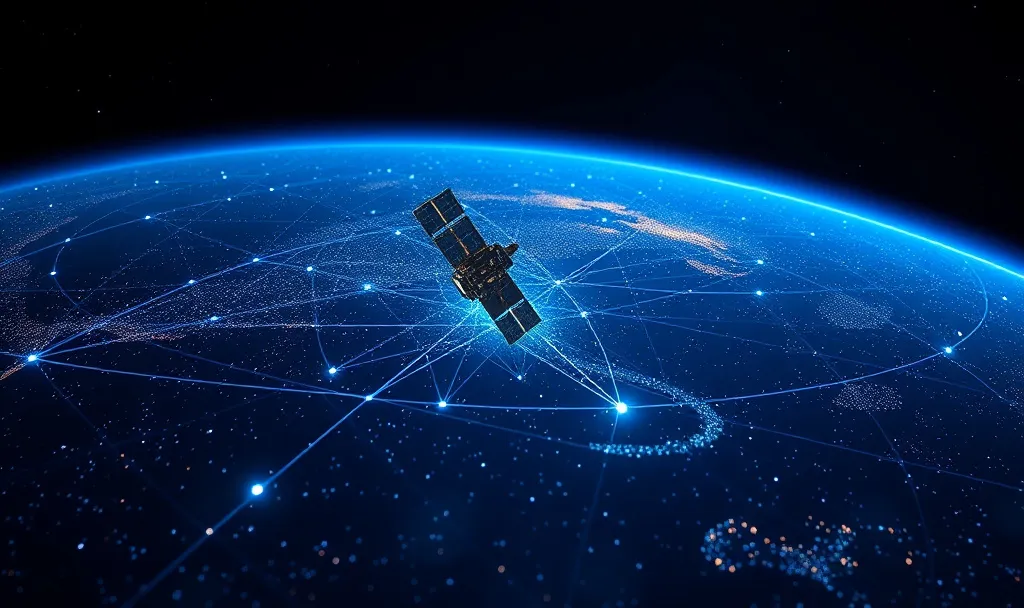
We have solved the launch cost problem. Now we face the terminal cost problem. Two business models are competing to solve it, and the winner will be decided by price tags and politics.
In my last post, I argued that Space Logistics—specifically reusable rockets—is the only way to physically reach the 73% of people in low-income nations who are still offline. We established that in countries like Ethiopia, the “Tyranny of Geography” makes terrestrial cables impossible.
But physics is only the first boss battle. The second boss is economics. And the third, as always, is politics.
Now that we can technically put a signal over a remote village in the Rift Valley, then questions come: Who pays for it? And who controls it?
As we enter 2026, the Satellite Internet Constellation (SIC) market has split into two distinct philosophical camps. One views the end-user as a customer; the other views the end-user as a community. The future of global connectivity will not be won by a single technology and business model, but by the delicate balance between these two solutions.
The Direct-to-Home (DTH) Model: The Starlink Thesis
SpaceX’s Starlink is the champion of the Direct-to-Home (DTH)model. This is the “Tesla” approach: vertical integration and direct sales to the consumer.
- How it works: You buy a terminal (Dishy), you put it on your roof, and you pay a monthly subscription. You own the connection.
- The Advantage: It offers total independence. A user does not need to wait for a local telecom company to upgrade their tower. It is permissionless infrastructure.
- The Fatal Flaw: The “Latte Limit.”
In the US or Europe, a $500 hardware kit and a $100/month subscription is the price of a few nice dinners or a daily coffee habit. It is affordable. But for farmers in rural Ethiopia, whose annual income are likely less than $1,000, this price is unaffordable. Even with subsidies, the unit economics of “one dish per family” simply does not work for the bottom of the economic pyramid.
The Communal Backhaul Model: The OneWeb Thesis
This is where the competing philosophy, championed by players like Eutelsat OneWeb, finds its foothold.
OneWeb has largely ignored the consumer market. They do not offer dish for sales to be installed on your house. Instead, they focus on B2B (Business-to-Business) and Backhaul.
- The Setup: OneWeb sells the connection to a local partner—a government, a school, or a mobile network operator (like Ethio Telecom). They install one enterprise-grade terminal in the village centre.
- The Distribution: That terminal connects to the satellite constellation and feeds the signal into local infrastructure—a Wi-Fi router or a small 4G cell tower.
- The User Experience: The farmer doesn’t buy a dish. They simply buy a $0.50 Wi-Fi scratch card or use their existing smartphone.
This approach socialises the hardware cost so a community can share the backhaul connection costs. It turns the satellite dish from a luxury consumer good (like, well, a Tesla Model S) into public infrastructure (like buses). And the frontline directly dealing with the end-users will be local telecom service providers.
The Logistics of Scale: Why “Less may be More”
Beyond the user economics, there is a massive industrial difference between these two approaches.
The DTH model requires brute force. To provide high-speed, low-latency internet to millions of individual dishes simultaneously, you need immense bandwidth density and reciprocal number of antennas. This forces operators like SpaceX to plan for constellations of 42,000 satellites.
Maintaining a swarm of that magnitude is a logistical nightmare. Even with the lift capacity of Starship, the constant need to replenish de-orbiting satellites and manage collision avoidance for tens of thousands of objects is a burden few companies can afford. The risk will be more visible when tens of thousands of LEO satellites are already in orbit.
The Communal Backhaul model is far less demanding on the satellites themselves. Because the satellites are not communicating with millions of scattered portals but rather with thousands of specialised, high-gain antennas at community hubs, the workload on the constellation is substantially reduced. This allows operators to achieve global coverage with a fraction of the satellites—hundreds, rather than tens of thousands. In the era of space sustainability and orbital debris, this efficiency matters.
The Sovereignty Trap: The Hidden geopolitical Friction
Finally, we cannot ignore the elephant in the room: Geopolitics.
The DTH model is inherently “intrusive” to sovereign states. When a company beams internet directly to a user’s backyard, it bypasses the domestic network infrastructure completely. This renders the local government unable to monitor, regulate, or tax the data flow within its own borders.
While this idea of “freedom internet” sounds noble to idealists (or maybe appealing to realists who think that it is a channel for controlling other sovereign states), it is a non-starter for many governments in the Global South. It poses a direct challenge to data sovereignty. We are already seeing pushback, with nations delaying licenses or banning services that refuse to land their traffic through local gateways.
The Communal Backhaul model avoids this conflict. By plugging into domestic distribution networks through local fibre and cell towers, it falls squarely within the jurisdiction of the local telecommunications regime. It respects the host country’s regulatory framework. Let’s focus on connecting first. Political problems of the control of data infrastructure necessitate a more nuanced approach to handle.
This makes the Backhaul model the “diplomatic” choice. It allows operators to expand without meddling in domestic politics or risking resentment from sovereign governments. It is a partnership, not a bypass.
Conclusion: A Hybrid Horizon
So, is the verdict in? Well, I have to give a disappointing and ambivalent answer.
It is foreseeable that there will not be a single mode of Satellite Internet Constellation (SIC) for the whole world. The future of the orbital internet is not a winner-take-all game championed by a single company or nation.
We will likely see a hybrid ecosystem. The DTH model will serve the affluent, the maritime industry, and the aviation sector—users who can pay for individualised service. Meanwhile, the Communal Backhaul model will do the heavy lifting of connecting the unconnected masses, working hand-in-hand with international organisations and local governments.
To truly bridge the digital divide and make the internet global, we need more than just rockets and dishes. We need vision, international cooperation, and the humility to accept that the best way to connect the world might not be to sell it a product, but to build it a network.